By the production team at Anyang Lonram Match Co., Ltd — 17+ years making matches.
1. Raw Material: The Wood
Almost every match stick starts as poplar or aspen — soft, straight-grained hardwoods that splinter cleanly and burn steadily. Logs arrive at the factory, are debarked, and are rotary-cut or sliced into thin veneer sheets around 2 mm thick. Consistency here matters more than anywhere else: a stick that's too thick won't strike; too thin and it snaps in the box.
2. Splint Cutting
Veneer sheets are chopped into splints — the raw sticks. Standard safety match splints are 2×2 mm in cross-section, and length depends on the product: 42 mm for classic matchboxes, 50–57 mm for larger boxes, up to 110 mm for cigar matches and 400 mm for fireplace matches. The splints are polished smooth so they slide freely and absorb wax evenly.
3. Soaking and Drying
Splints are soaked in a chemical bath — typically containing ammonium phosphate — that serves two jobs: it prevents afterglow (the stick going out instead of burning to the end), and it improves strike performance. Then comes slow drying to a precise moisture content. Too wet and matches warp; too dry and they get brittle.
4. Waxing and Head Dipping
Each splint tip is first dipped in molten paraffin — the fuel reservoir that keeps the flame burning after the head finishes its chemical burn. Then the tip is dipped into the match head compound: a mix of oxidizers (like potassium chlorate), fuel, binders and colorants. Heads are formed in two or three dips to build the classic bulb shape, then dyed — red is traditional, but we tip heads in any Pantone color for brand projects.
5. The Striking Surface
Here's what makes a safety match "safe": the head contains the oxidizer, but the striking strip contains the red phosphorus. The two chemicals only react together — so a match can't ignite on a random surface, only on its box. Strips are a blend of red phosphorus, glass powder (for friction) and adhesive, printed onto the box side and dried under controlled conditions.
6. Box Making and Printing
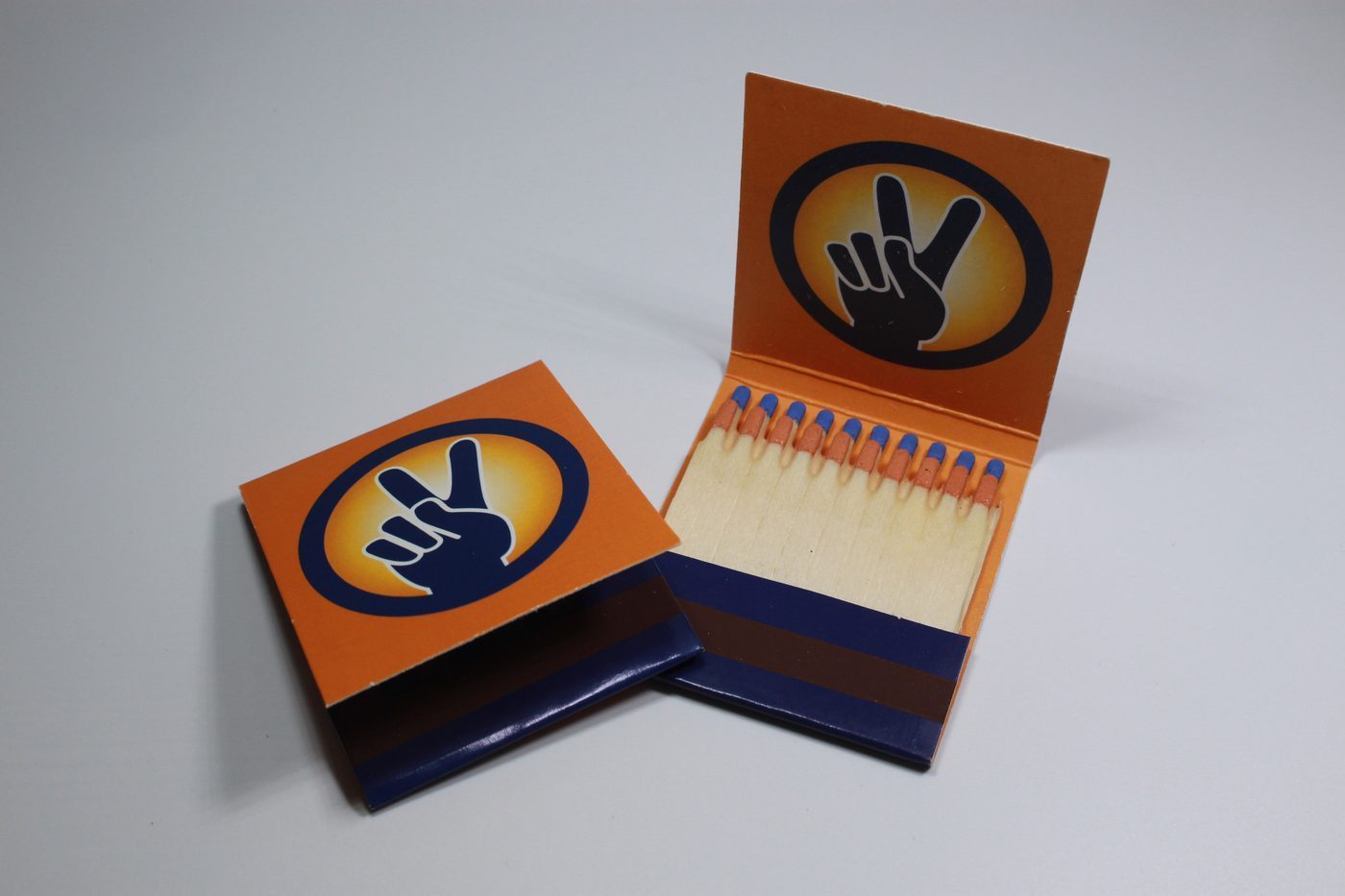
In parallel with stick production, cardboard sheets are printed (offset CMYK, Pantone, foil or embossing), die-cut, and folded into inner trays and outer sleeves. For luxury matchboxes, rigid greyboard boxes are hand-wrapped with printed art paper. The striking strip is applied last, on the side of the sleeve.
7. Filling and Packing
Automated filling machines count sticks — 10, 20, 40, or whatever the box design calls for — and slide them into trays. Filled boxes pass a sample strike test, then are cellophaned, cartoned and palletized. Every export carton is marked with batch numbers so any quality question can be traced back to its production day.
8. Quality Control Throughout
Key checkpoints: splint moisture, head adhesion, strike performance (first-strike reliability), burn time, box print registration, and carton drop tests. A batch that fails first-strike at the required rate never leaves the building.
Why This Matters for Buyers
When you buy matches, you're buying chemistry and tolerances. A supplier that controls its own dipping lines, drying times and QC will ship you boxes that strike first-time — and a supplier that doesn't will ship you complaints. That's why we keep every stage in-house.